Can You Transport a Coffin Yourself? UK Rules, Vehicle Options and Practical Advice
 runppcseo
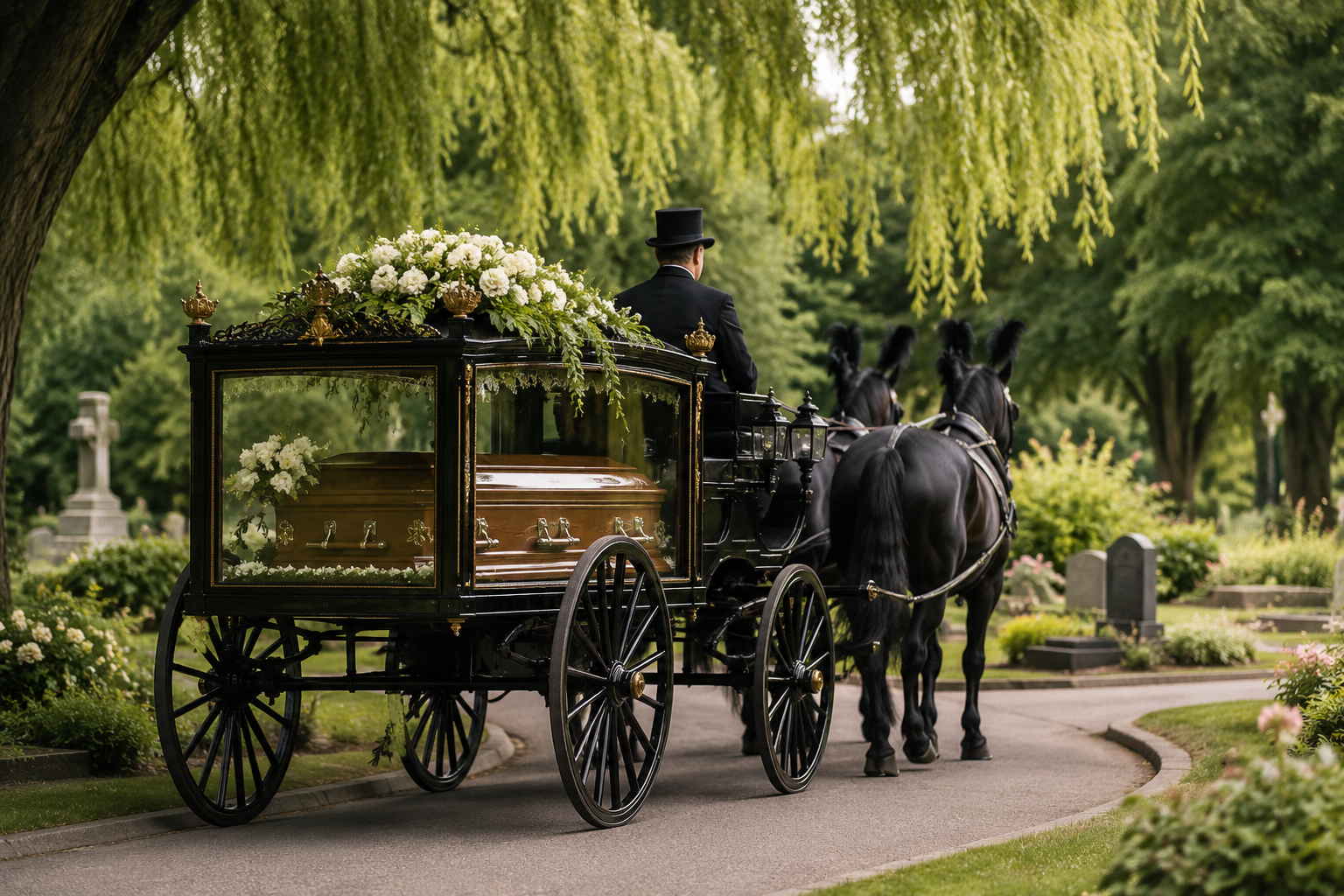
 A traditional hearse is the most familiar way to transport a coffin to a funeral, burial or cremation.
But it is not the only option.
Some families prefer to organise more of the funeral themselves, use a vehicle that has personal meaning, or simply choose a practical alternative to a conventional hearse.
Independent funeral arrangements are possible in the UK, and some local authorities explicitly recognise that families can use a vehicle of their choice to transport the deceased to a cemetery or crematorium. However, the practical arrangements still need to be handled carefully.
The coffin must be transported securely, the vehicle needs enough usable space, the destination needs to know what is happening and the journey needs to fit with the wider funeral arrangements.
This guide explains the main considerations if you are thinking about transporting a coffin yourself rather than using a traditional hearse.
Can You Transport a Coffin Yourself in the UK?
In many circumstances, families can organise funeral transport themselves rather than using a funeral director’s hearse.
For example, Barnet Council’s guidance on independent funerals states that independent funeral arrangers can use a vehicle of their choice to transport the deceased to a cemetery or crematorium.
Compare the Coffin has also previously discussed families using their own preferred vehicle as an alternative to a conventional hearse in its guide to alternative hearses and funeral transport.
However, the fact that you can organise transport yourself does not mean that every vehicle or every arrangement will automatically be appropriate.
You still need to consider safe handling, coffin size, vehicle space, securing the coffin and the requirements of the place you are travelling to.
Do You Legally Need a Hearse?
A traditional black hearse is not the only vehicle that can form part of a funeral.
Funeral transport can take many forms, including:
- traditional hearses
- estate cars
- vans
- people carriers
- horse-drawn hearses
- motorcycle hearses
- specialist or personalised vehicles
The more important practical question is whether the chosen vehicle can transport the coffin safely, securely and appropriately for the journey being made.
Why Might a Family Choose to Transport the Coffin Themselves?
There are several reasons a family may decide not to use a conventional hearse.
These can include:
- wanting a more personal funeral
- using a vehicle connected with the person who died
- organising an independent funeral
- reducing some funeral costs
- wanting more control over the route and journey
- preferring a less formal style of funeral
For some families, the journey itself can become an important part of saying goodbye.
That may make an unconventional vehicle feel more appropriate than a formal hearse.
What Kind of Vehicle Can Be Used?
The vehicle needs to be appropriate for the size and weight of the coffin and provide a safe way of loading, carrying and unloading it.
Possible options may include:
- a large estate car
- a suitable van
- a people carrier with sufficient internal space
- a specialist funeral vehicle
- another suitably adapted or spacious vehicle
The key word is suitable.
A vehicle may look large from the outside but still have insufficient usable length because of seats, wheel arches, internal trim or the shape of the rear opening.
Can You Transport a Coffin in an Estate Car?
A sufficiently large estate car may be practical in some circumstances.
Before relying on one, measure the actual usable interior space rather than assuming the coffin will fit.
You need to consider:
- usable internal length
- width at the narrowest point
- height of the rear opening
- whether the coffin can remain level
- how it will be secured
- how many people are available to load and unload it
Do not rely purely on the overall vehicle dimensions listed by the manufacturer.
The interior loading space is what matters.
Can You Use a Van or People Carrier?
A van or large people carrier may provide more usable space than a normal car.
Again, the important considerations are:
- whether the coffin fits comfortably
- whether it can be kept stable
- whether there are secure anchoring points
- whether loading and unloading can be carried out safely
If rear seats need to be folded or removed, check that the resulting floor area is flat enough and large enough for the coffin.
The coffin should not be forced into a space where it could move, tilt or become damaged during transport.
How Much Space Does a Coffin Need?
There is no single coffin size that applies to every person.
Adult coffins commonly vary in length, width and depth, and caskets can be more rectangular and wider than traditional tapered coffins.
Compare the Coffin’s coffin sizes and dimensions guide explains the measurements that matter, including internal and external dimensions.
For transport, the external measurements are particularly important.
Check:
- overall coffin length
- widest external point
- overall height
- additional width created by handles
If the fit is close, choose another vehicle rather than trying to force the coffin into an unsuitable space.
How Should a Coffin Be Secured in a Vehicle?
This is one of the most important safety considerations.
A coffin should not be able to slide freely around the vehicle during braking, cornering or acceleration.
Compare the Coffin’s existing alternative-hearse guidance specifically warns that the coffin should be secured so that it cannot surge forward when the vehicle brakes.
The exact method will depend on the vehicle, but the goal is straightforward:
The coffin needs to remain stable throughout the journey.
If you are uncertain how to secure it safely, seek advice before attempting the journey.
Who Can Carry the Coffin?
If you are arranging the transport yourself, you also need enough people to move the coffin safely.
Think about both ends of the journey.
You may need people to:
- collect the coffin
- load it into the vehicle
- unload it at the destination
- carry it into the service or committal area
The number of people required will depend on the coffin, the deceased, the access available and the capabilities of the people carrying it.
Do not underestimate the physical demands involved.
Where Are You Collecting the Coffin From?
The collection point can affect what arrangements are possible.
The deceased may be in the care of:
- a funeral director
- a hospital mortuary
- a public mortuary
- another appropriate facility
Do not arrive expecting to collect the coffin without making arrangements first.
Contact the organisation responsible for the deceased and establish:
- whether collection can be made directly
- what documents or authorisation are needed
- when collection can take place
- where the vehicle should be positioned
- whether staff can assist with transfer
What Should You Confirm With the Crematorium or Cemetery?
If you are not arriving in a conventional funeral cortege, contact the crematorium, cemetery or burial ground beforehand.
Ask:
- where you should arrive
- what time you need to be there
- where the vehicle should stop
- who will receive the coffin
- whether staff can assist
- whether there are specific coffin-size or handling requirements
If the funeral involves cremation, the coffin itself also needs to be suitable for the crematorium being used.
Compare the Coffin’s guide to coffin dimensions for crematoriums explains why external size can be important.
Do You Need a Funeral Director?
Many families choose to use a funeral director because they want professional help coordinating the practical arrangements.
However, some funerals are organised independently.
A funeral director can typically help with areas such as:
- care of the deceased
- coffin arrangements
- transport
- coordinating the service
- staff and bearers
Families who organise more themselves take responsibility for coordinating those practical elements.
The decision therefore depends on how involved you want to be and how comfortable you are managing the arrangements.
When Might a Traditional Hearse Be Easier?
Using your own vehicle can offer flexibility, but a conventional hearse may still be the more practical option in many circumstances.
A hearse may make sense if:
- you do not have a suitably sized vehicle
- you are uncomfortable handling the coffin
- the coffin is particularly large or heavy
- the funeral has complicated logistics
- you want professional bearers and transport staff
- the family prefers a traditional funeral procession
Choosing independent transport should be about creating an arrangement that feels appropriate, not avoiding professional help when it would make the day easier.
What Alternative Hearses Are Available?
If you want something more personal than a conventional hearse but do not want to transport the coffin entirely by yourself, specialist funeral transport can offer a middle ground.
Options available in the UK have included:
- horse-drawn hearses
- motorcycle hearses
- bicycle hearses
- vintage vehicles
- VW camper-style hearses
- classic vans
- specialist themed vehicles
Compare the Coffin has a much broader list in its existing guide to alternative hearses.
This can be useful if the aim is to make the final journey more personal while still using a purpose-arranged funeral transport service.
Does the Coffin You Choose Affect Transport?
Yes.
Different coffin styles can vary significantly in external size, weight and shape.
For example:
- traditional coffins taper towards the head and foot
- caskets are usually more rectangular
- handles can add to the external width
- different materials can affect overall weight
If you know you intend to use a private vehicle, check the coffin dimensions before purchase.
You can browse Compare the Coffin’s range of coffins and caskets alongside the dedicated coffin sizing guide to understand the practical differences between styles.
Practical Checklist Before Transporting a Coffin Yourself
Before the day of the funeral, confirm each of the following.
- The coffin’s external dimensions are known.
- The coffin fits comfortably inside the vehicle.
- There is a suitable way to secure it.
- Enough people are available for safe handling.
- The collection location knows you are coming.
- The crematorium, cemetery or venue knows how the coffin will arrive.
- The chosen coffin is suitable for the planned burial or cremation.
- The route and journey time have been planned.
- The vehicle is suitable, roadworthy and appropriately insured for how it is being used.
- Everyone involved understands what they need to do.
Taking time to work through these details can make the journey significantly calmer on the day.
Choosing the Right Funeral Transport
There is no single correct way for every family to make the final journey.
For some, a traditional hearse feels appropriate and provides welcome professional support.
For others, transporting the coffin in a family vehicle or choosing an unusual specialist hearse may feel much more personal.
The most important considerations are practical:
- Is the vehicle suitable?
- Does the coffin fit properly?
- Can it be secured safely?
- Are enough people available to handle it?
- Have the collection point and funeral venue been informed?
If you are arranging more of the funeral independently, it can also help to choose the coffin with the transport arrangements already in mind.
Explore the Compare the Coffin range, review the coffin sizes and dimensions guide, or read more about alternative hearse options before deciding what will work best.
You do not necessarily have to make the final journey in a traditional hearse. What matters is choosing an arrangement that is respectful, practical and safely organised.
Recommended Posts

Coffin or Casket? The Difference, and Which Suits a UK Funeral
September 25, 2026
What Is a Basket Casket and Is It the Same as a Wicker Coffin?
September 11, 2026