
Cremation Coffins Explained: Materials, Rules and What Funeral Directors Accept
 runppcseo
 Choosing a coffin for a cremation can feel more complicated than expected.
Families may be considering a traditional wooden coffin, cardboard coffin, wicker coffin, casket-style design or something more personalised, while also trying to understand whether the chosen option will actually be accepted for cremation.
The important point is that there is no single coffin material that must be used for every cremation.
Different coffin styles and materials can be suitable, but the coffin still needs to meet the practical requirements of the crematorium and the arrangements being made for the funeral.
This guide explains the main coffin options for cremation, what to check before buying and why it is sensible to confirm any specific requirements with the crematorium or funeral director involved.
Can You Use Any Coffin for Cremation?
Not necessarily.
Many different coffin materials can be used for cremation, but the final decision should take into account the requirements of the specific crematorium.
A coffin needs to be suitable for safe handling and for the cremation process itself.
That means factors such as:
- the materials used
- the coffin’s construction
- its size and weight
- handles and fittings
- any decorative elements
- the crematorium’s own operating requirements
If you are buying a coffin independently rather than through a funeral director, it is therefore sensible to confirm suitability before ordering.
Compare the Coffin offers a wide range of coffins and caskets, including traditional, cardboard and natural-material options.
What Makes a Coffin Suitable for Cremation?
A coffin used for cremation needs to perform several basic functions.
It must be strong enough to contain and support the deceased during handling and the funeral, while also being made from materials that are appropriate for cremation.
The exact requirements can vary between facilities, which is why families should avoid assuming that every decorative feature or material will be accepted everywhere.
In practical terms, suitability can depend on:
- whether the coffin can be safely moved
- whether the materials are appropriate for cremation
- whether the dimensions are compatible with the crematorium equipment
- whether fittings contain materials that need to be avoided or removed
The coffin itself should therefore be considered as part of the cremation arrangements rather than purely as a visual choice.
Wooden Coffins for Cremation
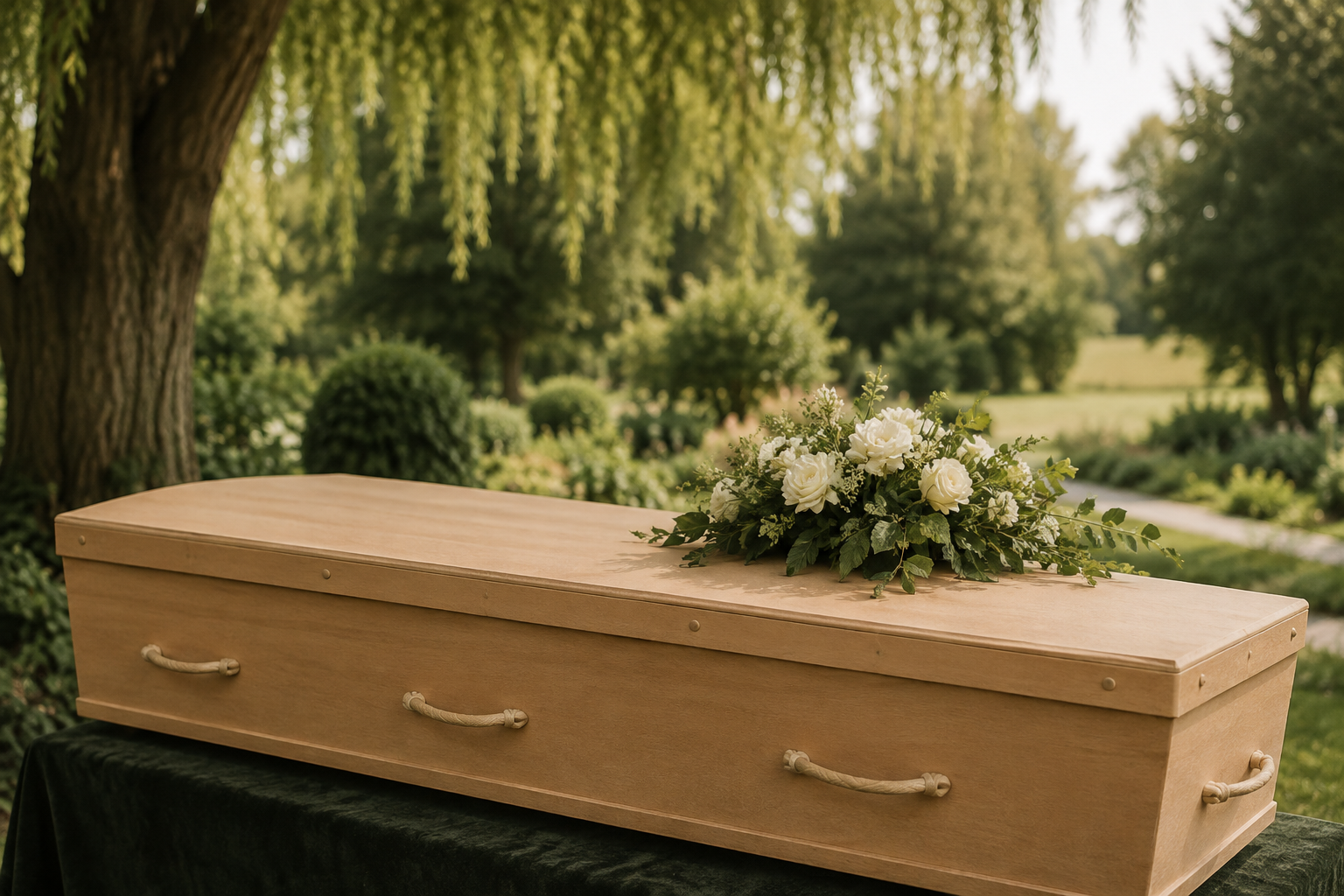
Traditional wooden coffins are one of the most familiar choices for a cremation funeral.
They can range from relatively simple designs to more decorative styles with different finishes, mouldings and detailing.
Compare the Coffin’s traditional coffin range includes the classic British coffin shape, which is generally wider around the shoulders and narrows towards the head and feet.
Wooden coffins used for cremation may use different materials and fittings from products designed primarily for burial, so it is worth checking the specification rather than assuming every wooden coffin is identical.
For families who want a familiar, understated appearance, a traditional wooden coffin can be a straightforward option.
Cardboard Coffins for Cremation
Cardboard coffins have become an increasingly visible alternative to traditional wooden designs.
They can appeal to families looking for:
- a lighter appearance
- personalised printed designs
- a simpler coffin style
- an alternative to conventional wood finishes
Compare the Coffin’s cardboard coffins are available in traditional coffin shapes as well as rectangular casket-style designs, with personalised options also available.
Cardboard does not automatically mean fragile. Purpose-built cardboard coffins are designed to support the deceased safely and securely.
As with any coffin, confirm that the specific design is appropriate for the crematorium being used.
Wicker and Willow Coffins for Cremation
Wicker and willow coffins offer a softer, more natural appearance than many conventional wooden coffins.
They are often chosen by families who prefer:
- natural materials
- a less formal visual style
- handcrafted construction
- a more environmentally conscious aesthetic
Natural woven coffins still need to be structurally suitable for carrying and cremation, and the exact product specification should be checked before use.
The visual difference can be significant, so this is often a very personal choice rather than simply a technical one.
Can You Use an American-Style Casket for Cremation?
Potentially, yes.
However, a casket is not simply another word for a traditional British coffin.
A traditional coffin is generally tapered around the body, while an American-style casket is usually rectangular and may use a hinged lid.
Compare the Coffin’s guidance on different coffin types explains the distinction between traditional British coffin designs, cardboard coffins and rectangular casket-style options.
If you are considering a larger or more elaborate casket for cremation, confirm:
- external dimensions
- overall weight
- construction materials
- handles and fittings
- whether the crematorium can accommodate it
Do not assume that a casket accepted at one crematorium will automatically be accepted at every other facility.
Are Metal Coffins Suitable for Cremation?
Metal coffins and heavily metal-lined caskets require particular care when considering cremation.
Cremation facilities generally work with coffins designed specifically for the cremation process, and extensive metal construction may not be appropriate.
This is an area where families should confirm the requirements with the crematorium before purchasing.
If you like the appearance of a particular casket but plan to use it for cremation, ask specifically whether the materials and fittings are suitable rather than judging from appearance alone.
What About Coffin Handles, Fixtures and Fittings?
Handles and decorative fittings are another reason why product specification matters.
A coffin may include:
- carrying handles
- decorative handles
- name plates
- screws
- ornamental fittings
- fabric lining
Different products use different materials, so it is worth checking the individual specification rather than assuming that all fittings are constructed in the same way.
If a crematorium has specific requirements around fittings or materials, those should be confirmed before the funeral.
Do Crematoriums Have Their Own Coffin Requirements?
Yes, they can.
This is one of the most important practical points in the whole decision.
A crematorium may have requirements relating to:
- maximum coffin dimensions
- maximum weight
- construction materials
- fittings
- decorative items
These requirements may reflect the equipment and procedures used at that particular facility.
For that reason, it is better to confirm the requirements of the actual crematorium rather than relying on a general assumption.
Can You Buy Your Own Coffin for a Cremation?
Yes, families can choose to purchase a coffin independently rather than buying one as part of a funeral director’s package.
This can give greater choice over:
- style
- material
- colour
- personalisation
- budget
However, buying independently makes it particularly important to coordinate the purchase with the funeral arrangements.
Before ordering, establish:
- where the coffin needs to be delivered
- when it is required
- who will receive it
- what dimensions are required
- whether the funeral director or crematorium has any restrictions
This avoids discovering too late that a particular product does not fit the practical requirements of the funeral.
Does a Funeral Director Have to Accept a Coffin Bought Elsewhere?
Families considering an independently purchased coffin should discuss this with the funeral director before placing the order.
The funeral director needs to be satisfied that the coffin is suitable for safe handling and compatible with the funeral arrangements.
Rather than assuming acceptance either way, provide the funeral director with the coffin specification and ask them to confirm that it is suitable.
This is especially important for:
- unusual coffin materials
- large caskets
- custom-made designs
- non-standard dimensions
Clear communication early in the process is much easier than trying to solve a compatibility problem immediately before the funeral.
What Size Coffin Is Needed?
Coffin size should be chosen according to the deceased rather than simply selecting a standard product without checking dimensions.
Important measurements can include:
- overall height
- shoulder width
- body build
- required internal space
Coffins and caskets can also have different shapes even when their overall external dimensions appear similar.
Compare the Coffin has a dedicated coffin sizes and dimensions guide explaining the differences between coffin and casket shapes and how the construction material can influence the dimensions available.
If there is any uncertainty about sizing, ask before ordering.
Does the Coffin Need to Be Approved Before the Funeral?
There may not be a formal approval process in every situation, but it is sensible to confirm suitability before the funeral date.
This is particularly worthwhile when:
- the coffin has been bought independently
- the design is unusual
- the coffin is especially large
- the materials are unconventional
- the crematorium has specific restrictions
The funeral director can usually help coordinate this practical side of the arrangements.
Are Eco-Friendly Coffins Suitable for Cremation?
Many coffins marketed as natural or environmentally conscious can be suitable for cremation, but suitability still depends on the specific construction and crematorium requirements.
Options can include:
- cardboard coffins
- willow coffins
- wicker coffins
- other natural woven materials
However, terms such as “eco-friendly” can cover very different products.
If environmental impact is an important part of the decision, look at the actual materials, manufacturing process and product construction rather than relying only on a marketing label.
How Much Does a Cremation Coffin Cost?
The cost of a coffin for cremation can vary significantly.
Price is influenced by factors such as:
- material
- construction
- size
- finish
- personalisation
- manufacturer
- delivery requirements
A simple cardboard coffin may sit at a very different price point from a handcrafted natural willow coffin or more elaborate casket.
The right approach is not necessarily to choose the cheapest or most expensive option.
It is to find a coffin that:
- fits the person correctly
- suits the planned funeral
- meets cremation requirements
- reflects the family’s preferences
- fits the available budget
Compare the Coffin’s online coffin and casket range allows families to compare different materials and price points directly.
What Happens to the Coffin During Cremation?
The coffin accompanies the deceased into the cremation process.
This is why the materials and fittings used in the coffin matter.
The coffin is not simply a container used during the service. Its construction also needs to be appropriate for the cremation arrangements.
What Happens to the Ashes Afterwards?
After cremation, the cremated remains can be returned to the family in an appropriate container.
Families then have several choices depending on their wishes. Ashes may be:
- kept in an urn
- placed in an ash casket
- scattered
- interred
- divided between family members where appropriate
Compare the Coffin offers a range of cremation urns, ash caskets and scatter tubes for families considering what to do with the ashes afterwards.
These decisions do not need to be made at exactly the same time as choosing the coffin, but some families find it helpful to understand the full process in advance.
Questions to Ask Before Buying a Coffin for Cremation
If you are arranging a cremation and considering purchasing the coffin yourself, work through these questions before ordering:
- What coffin size is required?
- Is the chosen material suitable for cremation?
- Does the crematorium have any specific restrictions?
- Will the funeral director accept and handle the coffin?
- Are the handles and fittings appropriate?
- Does the coffin need to meet a maximum weight or size?
- Where should it be delivered?
- When does it need to arrive?
- Is personalisation required?
- Is the quoted price inclusive of delivery?
If any answer is uncertain, clarify it before purchasing.
Choosing the Right Coffin for a Cremation
There is no single “correct” coffin for every cremation.
A traditional wooden coffin may feel right for one family. Another may prefer a personalised cardboard coffin, a natural willow design or a rectangular casket.
The best choice balances:
- personal preference
- appropriate sizing
- funeral arrangements
- crematorium requirements
- budget
If you are comparing options, you can browse the full Compare the Coffin range, read more about different types of coffins or review the dedicated coffin sizing guide before making a decision.
Choose the coffin you feel is right, but confirm that it is practically suitable for the cremation arrangements before ordering.
That way, families can retain meaningful choice while avoiding unnecessary problems at an already difficult time.
Recommended Posts
Types of Coffins: Materials, Prices and Suitability Compared
September 25, 2026
Coffin or Casket? The Difference, and Which Suits a UK Funeral
September 25, 2026
Are Fabric Coffins Suitable for Burial or Cremation? Complete Guide
September 18, 2026