
Are Fabric Coffins Suitable for Burial or Cremation? Complete Guide
 runppcseo
 Are Fabric Coffins Suitable for Burial or Cremation? Complete Guide
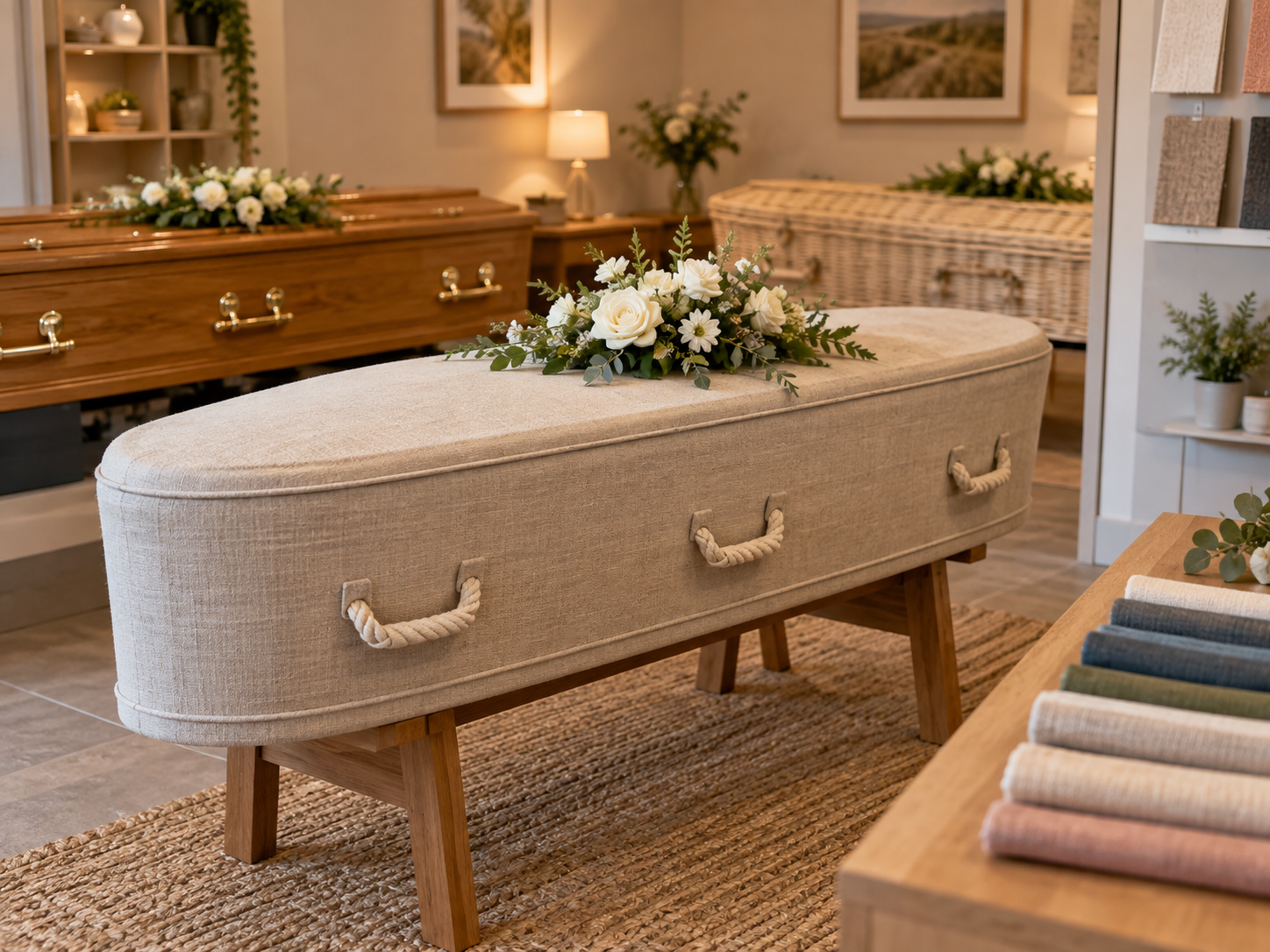
A fabric coffin is a coffin with a supportive inner structure and a decorative material covering applied to its exterior. Within the Compare the Coffin range, these are UK-manufactured cardboard coffins covered with a decorated pall, including Fragrant Root or Woven Banana Leaf options. Depending on the exact construction and the requirements of the chosen funeral venue, a fabric coffin may be suitable for burial or cremation.
The fabric-covered finish creates a softer and more distinctive appearance than an undecorated cardboard or conventional wooden coffin. It can therefore appeal to families looking for something personal, natural-looking or less formal while retaining a practical coffin structure beneath the outer covering.
What Is a Fabric Coffin?
The term fabric coffin generally describes a coffin whose main structure has been covered with a decorative textile, woven material or pall. The covering changes the appearance and texture of the coffin without acting as the primary load-bearing structure.
It is important to check what a particular supplier means by “fabric coffin” because construction methods can vary. Some may use a wooden frame while others use cardboard or another lightweight structural material.
The fabric coffins available through Compare the Coffin use a UK-manufactured cardboard coffin beneath a decorated outer pall. This creates a combination of practical construction and a more textured visual finish.
How Is a Fabric Coffin Constructed?
A fabric coffin is normally built in layers. The inner structure provides the strength and shape while the outer material supplies the decorative finish.
The main elements may include:
- A supportive cardboard or other structural shell
- A secure base designed to support the required weight
- An internal lining and headrest where included
- A decorative pall fitted over the exterior
- Suitable handles, fastenings and identification details
The decorative covering does not replace the coffin structure. It is applied to the outside to create the desired appearance while the underlying shell performs the practical function.
What Coverings Are Available?
The coverings available will depend on the manufacturer and current product range. Compare the Coffin describes options including Fragrant Root and Woven Banana Leaf coverings. These are handmade in a fair-trade facility in Indonesia before being used as decorative palls on UK-manufactured cardboard coffins.
Fragrant Root
A Fragrant Root covering can provide a textured, natural-looking finish. Its woven appearance helps distinguish the coffin from smooth cardboard, veneered wood or painted alternatives.
Woven Banana Leaf
A Woven Banana Leaf covering provides another organic-looking texture. The material creates a softer presentation associated with woven and plant-based funeral products while being supported by the cardboard coffin beneath it.
Product colours, textures and finishing details can vary. Families should therefore review the individual product description and images before ordering rather than assuming that every fabric coffin has the same construction or appearance.
Are Fabric Coffins Suitable for Cremation?
A fabric coffin may be suitable for cremation when its complete construction meets the requirements of the chosen crematorium. The decision is not based on the outer appearance alone. The structural materials, covering, lining, handles, adhesives and fittings must all be acceptable.
Crematoria may have their own acceptance procedures and restrictions. Before placing an order, provide the exact coffin details to the funeral director or crematorium and request confirmation that the selected model can be accepted.
This is particularly important when purchasing a coffin independently because the venue needs to approve the complete product rather than simply the general category of “fabric coffin.”
Are Fabric Coffins Suitable for Burial?
Fabric coffins may also be suitable for burial, but the requirements can vary between cemeteries, churchyards and natural burial grounds. A conventional cemetery may accept a wider range of coffin materials while a natural burial ground may apply more specific environmental standards.
The burial site may want to confirm:
- The material used for the structural shell
- The composition of the decorative covering
- Whether the lining and handles meet site requirements
- Whether metal or plastic components are present
- The dimensions and weight capacity of the coffin
Always ask the cemetery or burial ground to approve the specific coffin before ordering. A product that is appropriate for one location may not automatically meet the policies of another.
How Does a Fabric Coffin Differ From a Traditional Coffin?
A traditional coffin is usually associated with a wood, wood-effect or veneered exterior. It commonly has a smooth or polished appearance with familiar angular sides and conventional fittings.
A fabric coffin places greater visual emphasis on its outer covering. The woven or textile-style finish can appear softer and less formal while providing a distinctive alternative to polished wood.
The difference is therefore not only visual. The core structure, overall weight, materials and fitting options may also differ. Individual product specifications should be compared rather than making a decision based on appearance alone.
How Does a Fabric Coffin Differ From a Cardboard Coffin?
The fabric coffins described by Compare the Coffin already use a cardboard structure. The main difference is that the outside is finished with a decorative pall rather than being left plain, painted or printed.
A standard cardboard coffin may display the cardboard finish directly or use printed artwork and personalised imagery. A fabric-covered version uses an additional textured outer layer to create a different look.
Families choosing between the two may wish to compare:
- The preferred visual style
- The type of personalisation available
- The materials used in the outer finish
- The overall price
- Approval from the crematorium or burial ground
How Does a Fabric Coffin Differ From a Natural-Material Coffin?
A natural-material coffin is generally constructed using woven or plant-based materials such as willow, bamboo, banana leaf or pandanus. In these products, the natural material often forms a major part of the actual coffin structure.
A fabric coffin can create a similarly textured appearance, but its main shell may be cardboard with the natural-looking material applied as an outer covering. This structural distinction is important when comparing products.
Families drawn to softer or woven finishes can view the wider selection of natural-material coffins alongside fabric-covered options before deciding which construction and appearance they prefer.
Why Might Someone Choose a Fabric Coffin?
There is no single correct coffin style. The choice is personal and may reflect appearance, funeral arrangements, cultural preferences, environmental considerations or budget.
A fabric coffin may be considered because it offers:
- A softer alternative to polished wood
- A distinctive woven or textured finish
- A practical cardboard structure beneath the covering
- A balance between visual individuality and value
- An appearance suited to a less conventional funeral
The most important consideration is whether the coffin feels appropriate for the person being remembered and meets all practical requirements for the planned funeral.
What Should You Confirm Before Ordering?
Before purchasing a fabric coffin, confirm the practical details with the supplier, funeral director and funeral venue.
Check the following:
- The exact internal and external dimensions
- The stated weight capacity
- What materials are used in the shell and covering
- Whether the lining, handles and nameplate are included
- Whether the selected venue has approved the coffin
- Delivery times and the delivery destination
- Whether the funeral director can receive and inspect it
If purchasing directly, the Compare the Coffin ordering guide explains how the process works and how the coffin can be coordinated with the funeral arrangements.
Frequently Asked Questions
Is a fabric coffin made entirely from fabric?
Usually not. The fabric or woven material provides the decorative outer finish while a separate shell supplies the required structure. Compare the Coffin’s fabric options use a UK-manufactured cardboard coffin beneath the decorated pall.
Can a fabric coffin be purchased without using a funeral director?
A coffin can be purchased directly, but the funeral director or venue should be informed before the order is placed. They can confirm delivery arrangements, required dimensions and whether the specific coffin is suitable for the planned burial or cremation.
Can a fabric coffin be personalised?
Personalisation will depend on the individual product and supplier. Some options may allow a nameplate or other selected details, but changes should not be made without confirming that they will remain acceptable to the funeral venue.
How can I get help choosing the right coffin?
Compare the available materials, dimensions and funeral requirements before deciding. If you need help reviewing the options, contact Compare the Coffin for further guidance.
Choosing a Fabric Coffin
A fabric coffin can provide a distinctive alternative to plain cardboard, polished wood and fully woven natural-material coffins. Its defining feature is the decorative outer covering placed over a supportive inner structure.
Before ordering, confirm the exact materials, dimensions, weight capacity and venue requirements. This ensures that the chosen coffin is appropriate for the person being remembered and suitable for the practical arrangements surrounding the funeral.
Explore the available fabric coffin options or contact Compare the Coffin if you need further assistance.
Recommended Posts
Cardboard Coffins, Cardboard is an amazing material for Coffins
October 16, 2024