
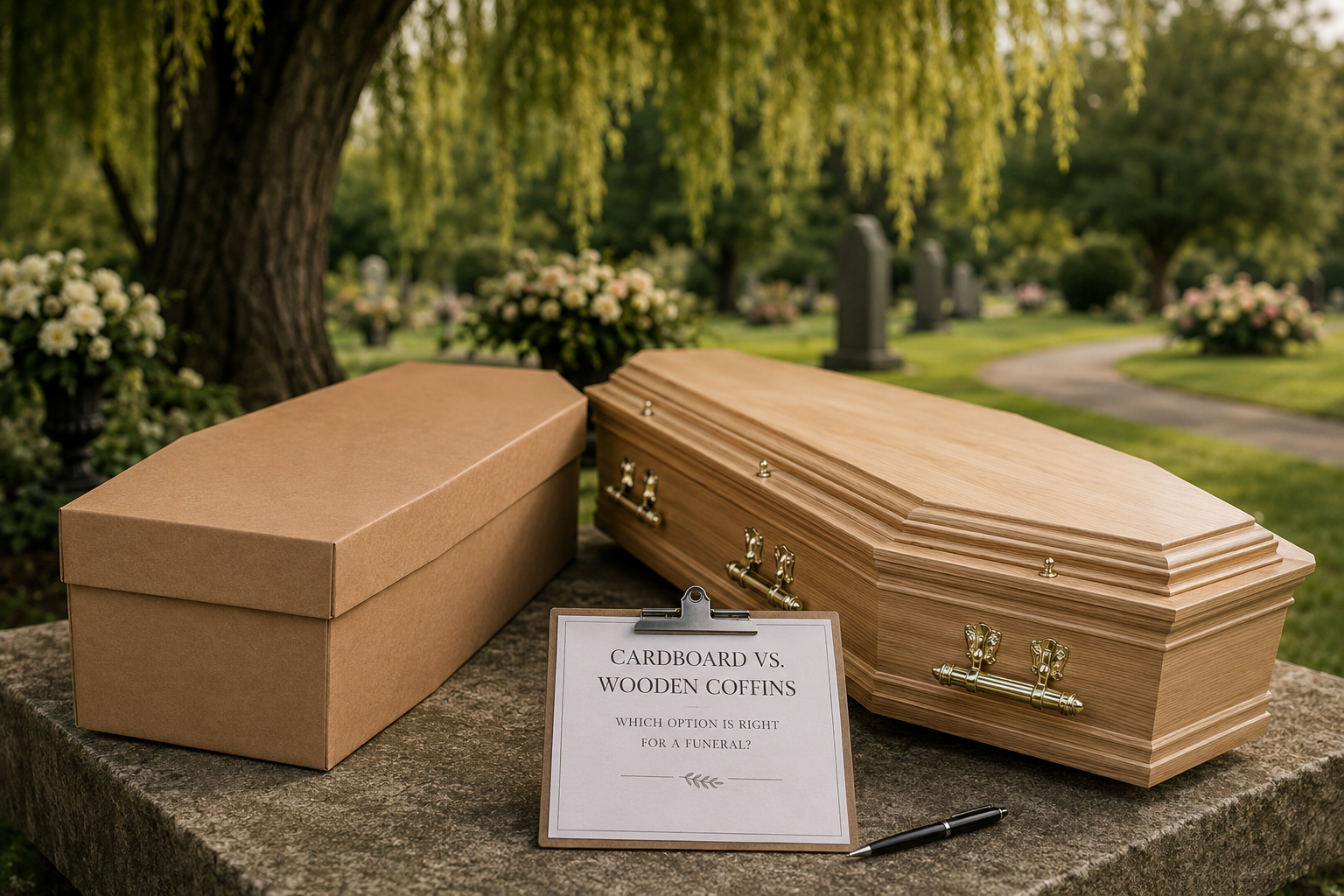
Cardboard Coffins vs Wooden Coffins: Which Option Is Right for a Funeral?
 runppcseo
 Choosing a coffin is a deeply personal part of arranging a funeral.
For some families, a traditional wooden coffin feels familiar and appropriate. Others prefer the simplicity, lighter construction or personalisation possibilities offered by a cardboard coffin.
Neither material is automatically more dignified or more suitable than the other. Both can provide a respectful final tribute when properly made and chosen with the funeral arrangements in mind.
The right option will depend on several factors, including:
- The wishes and personality of the person who has died
- Whether the funeral involves burial or cremation
- The family’s budget
- The desired appearance
- Environmental priorities
- Personalisation requirements
- The rules of the chosen crematorium or burial ground
This guide explains the main differences between cardboard and wooden coffins so you can make a more informed and considered decision.
What Is a Cardboard Coffin?
A cardboard coffin is normally made from reinforced corrugated cardboard or another strong paper-based material designed specifically for funeral use.
Although the word “cardboard” can sound lightweight or temporary, purpose-made cardboard coffins are engineered to support and carry the deceased safely. They are not the same as ordinary packaging boxes.
Cardboard coffins are available in a wide variety of styles, including:
- Plain kraft or neutral finishes
- Wood-effect designs
- Printed floral patterns
- Landscapes and nature themes
- Religious or symbolic artwork
- Hobby and interest-based designs
- Bespoke photographic finishes
- Coffins that families can decorate themselves
Compare the Coffin offers cardboard coffin options in numerous colours and themes, allowing families to compare designs and prices from one place. The company also advertises clear pricing and free delivery across mainland UK on its coffin range.
What Is a Wooden Coffin?
The term wooden coffin covers several different types of construction.
A coffin that appears wooden may be made from:
- Solid timber
- Veneered wood
- Wood composite board
- MDF or chipboard with a wood-effect finish
- Plywood
- Sustainably sourced timber
This distinction matters because not every wooden coffin is made entirely from solid wood.
Standard funeral coffins in the UK are frequently manufactured from wood composite or chipboard and then finished with a veneer to create the appearance of natural timber.
Wooden coffins are available in finishes such as:
- Oak
- Mahogany
- Rosewood
- Light or dark wood stains
- Painted finishes
- Simple veneer
- Premium polished timber
They may also include decorative mouldings, handles, nameplates, fabric linings and other traditional details.
Compare the Coffin’s range includes traditional British coffin designs in various wood stains, including oak, mahogany and rosewood-style finishes.
Cardboard Coffins vs Wooden Coffins at a Glance
| Consideration | Cardboard coffin | Wooden coffin |
|---|---|---|
| Appearance | Plain, printed, colourful or fully personalised | Traditional, formal or contemporary |
| Weight | Generally lighter | Usually heavier |
| Personalisation | Extensive printed and decorative options | Mainly finish, fittings, engraving and lining |
| Cost | Often competitively priced, but not always the cheapest | Varies from basic veneer to premium solid timber |
| Cremation | Often suitable when manufactured to crematorium standards | Commonly used, but materials and fittings must comply |
| Burial | Can be suitable, subject to burial-ground requirements | Widely accepted, subject to local rules |
| Environmental considerations | Often biodegradable and made using paper-based materials | Depends heavily on timber source, coatings, fittings and construction |
| Style | Modern, simple or highly individual | Familiar, formal and traditional |
Which Coffin Looks More Traditional?
A wooden coffin is generally the more traditional-looking option in the UK.
Its timber appearance, shaped lid, handles and classic detailing are familiar features at church services, crematoria and graveside ceremonies.
Some families find this familiarity comforting. A wooden coffin can also suit a formal funeral where the family wants a restrained or conventional presentation.
However, choosing cardboard does not mean the coffin must look informal.
Cardboard coffins can be produced with convincing wood-effect prints, neutral colours or subtle decorative patterns. They can therefore retain a traditional appearance while offering the benefits of a paper-based construction.
The decision should be based on what feels appropriate for the person and the service, rather than on the assumption that only one material can appear respectful.
Are Cardboard Coffins Cheaper Than Wooden Coffins?
Cardboard coffins are often described as a lower-cost alternative, but this is not always true in every comparison.
The final price of a cardboard coffin can vary according to:
- Size
- Structural specification
- Printing
- Bespoke artwork
- Interior lining
- Delivery
- Manufacturer
- Whether it arrives assembled
A simple cardboard design may cost less than a premium wooden coffin. However, a highly personalised printed cardboard coffin may cost more than a basic wood-effect or veneer coffin.
Wooden coffin prices also vary significantly.
A simple chipboard coffin with a veneer finish is very different from a handcrafted solid oak coffin. The material, finish, fittings and workmanship all affect the final price.
For that reason, it is better to compare individual products on a like-for-like basis rather than assuming that cardboard is always the cheapest option.
Compare current coffin designs, specifications and prices before deciding which material provides the best fit for the funeral and budget.
Which Option Is Easier to Personalise?
Cardboard coffins generally provide greater freedom for visual personalisation.
Because the outer surface can be printed, families may choose imagery connected to the person’s:
- Favourite place
- Profession
- Sport or hobby
- Garden or favourite flowers
- Music
- Heritage
- Military service
- Faith
- Family photographs
- Favourite colours
Some cardboard coffins are supplied with a blank or simple exterior so relatives can add drawings, messages or decorations themselves.
This can become a meaningful part of the funeral process, particularly where children, grandchildren or close friends want to contribute something personal.
Wooden coffins can also be personalised, but the options are usually different. These may include:
- Choosing a specific wood stain
- Selecting handles and fittings
- Adding an engraved nameplate
- Choosing the lining
- Adding floral arrangements
- Selecting carved or decorative features
- Using a painted or bespoke finish
A wooden coffin may therefore suit a family seeking understated, traditional personalisation, while cardboard may be stronger for a highly visual or individual design.
Are Cardboard Coffins Suitable for Cremation?
Many purpose-made cardboard coffins are suitable for cremation.
However, acceptance should always be confirmed before ordering because each crematorium must ensure that the coffin complies with its construction, size and material requirements.
UK cremation guidance states that cardboard coffins should be made from suitable combustible materials and should not contain certain chlorine-based wet-strength agents. Restrictions may also apply to metal fittings, PVC, varnishes and other materials that could produce excessive smoke or harmful emissions.
Some crematoria may inspect a cardboard coffin or require confirmation of its specification before accepting it.
The safest approach is to provide the funeral director or crematorium with the product details in advance.
This is especially important where the coffin includes:
- Bespoke coatings
- Added decorations
- Photographs
- Painted surfaces
- Plastic components
- Non-standard fittings
- Unusual internal contents
Families should also speak with the crematorium before adding personal belongings inside any coffin, as some items may not be permitted during cremation.
Are Wooden Coffins Suitable for Cremation?
Wooden and wood-effect coffins are widely used for cremation, but they must still meet the crematorium’s requirements.
The suitability depends not only on the main coffin material but also on:
- Handles
- Screws and fittings
- Adhesives
- Lacquers
- Paint
- Interior lining
- Decorative components
- Metal content
Cremation guidance generally requires coffins to burn safely without generating excessive smoke, toxic gases or problematic residue. Certain coatings and materials, including PVC and some heavy metal components, may be restricted.
A reputable supplier should be able to confirm whether a specific wooden coffin has been designed for cremation.
Can Cardboard Coffins Be Used for Burial?
Cardboard coffins can be used for many burials, including some natural and woodland burials.
Their paper-based, biodegradable construction can make them particularly suitable for burial grounds that prioritise natural materials.
However, burial-ground rules are not identical across the UK.
Some natural burial sites only permit biodegradable coffins or shrouds, while individual cemeteries may have their own requirements concerning construction, size and materials.
Before ordering, confirm the policy with:
- The cemetery
- The natural burial ground
- The churchyard authority
- The funeral director
- The local council, where applicable
The coffin must also be sufficiently strong and appropriately constructed for transport, carrying and burial.
Can Wooden Coffins Be Used for Burial?
Wooden coffins are widely used for burial in traditional cemeteries and churchyards.
They can also be suitable for natural burial, although the type of wood and finish may matter.
A natural burial ground may require:
- Untreated timber
- Biodegradable construction
- Natural linings
- Minimal metal fittings
- No synthetic varnish
- No plastic handles
- No non-biodegradable decorative materials
A heavily lacquered or highly manufactured wood-effect coffin may therefore not meet the rules of every green burial site.
Families planning a natural burial should check the full specification rather than relying only on the word “wooden”.
Which Option Is More Environmentally Friendly?
There is no single answer that applies to every cardboard and wooden coffin.
The environmental effect of a coffin depends on factors including:
- Where the raw materials came from
- Whether recycled content was used
- How the product was manufactured
- The amount and type of adhesive
- Printing and coating materials
- Metal or plastic fittings
- Transport distance
- Whether it will be buried or cremated
- Whether the timber was responsibly sourced
- How quickly the material biodegrades
A simple cardboard coffin made using recycled or responsibly sourced fibres may be an environmentally conscious choice, particularly where it contains minimal coatings and fittings.
A simple wooden coffin made from responsibly sourced, untreated timber may also provide a suitable biodegradable option.
By contrast, either material may have a greater environmental effect if it includes extensive synthetic coatings, plastic components, heavy fittings or long-distance transportation.
It is therefore more accurate to assess the individual product and its full construction than to assume that one material is universally greener.
Which Coffin Is Stronger?
Wooden coffins often feel more substantial because of their weight and rigid construction.
However, a professionally manufactured cardboard coffin should also be designed and tested to carry the deceased safely.
Strength will depend on:
- The grade and layering of the cardboard
- Reinforcement
- Base construction
- Maximum weight capacity
- Exposure to moisture
- Correct assembly
- Handling instructions
Families should always check the stated weight capacity and ensure that the coffin is suitable for the person’s measurements.
The funeral director or supplier should also be told about any specific size or weight requirements before an order is placed.
Which Coffin Is Easier to Carry?
Cardboard coffins are generally lighter than wooden coffins before the deceased is placed inside.
This may make transportation and handling easier, but it does not remove the need for trained, careful pallbearers.
The total carrying weight includes both the coffin and the deceased. The number of bearers and carrying method should therefore be planned according to the complete weight and the route involved.
Factors such as steps, narrow entrances, uneven cemetery ground and the distance from the hearse should also be considered.
A funeral director can advise on whether family members can participate safely in carrying the coffin.
Should You Buy the Coffin Through a Funeral Director or Independently?
Families are not always limited to selecting a coffin from a funeral director’s standard range.
A coffin may also be purchased from an independent supplier, provided it is suitable for the planned funeral and accepted by the funeral director, crematorium or burial ground.
Before purchasing independently, confirm:
- Required external dimensions
- Delivery times
- Whether the coffin arrives assembled
- Weight capacity
- Cremation or burial suitability
- Delivery location
- Who will receive and inspect it
- Whether the funeral director charges a handling fee
- Whether any additional paperwork is needed
Compare the Coffin is designed to help UK families review coffin and casket styles, prices and specifications online rather than feeling restricted to a single option.
How to Choose Between a Cardboard and Wooden Coffin
The following questions can make the decision clearer.
What would best represent the person?
Consider their personality, values, beliefs and preferences.
A brightly printed cardboard coffin may suit someone known for colour, humour or a particular passion. A simple wooden coffin may better reflect someone who preferred tradition or understated design.
What type of service is being arranged?
Think about whether the funeral will take place in:
- A church
- A crematorium
- A cemetery
- A woodland burial ground
- A natural burial site
- A non-religious venue
Both materials can work in many settings, but the rules and visual tone of the service may influence the decision.
Is extensive personalisation important?
Cardboard provides greater scope for full-colour printing and bespoke themes.
Wood offers more traditional choices through timber appearance, stain, fittings and craftsmanship.
What is the full cost?
Compare the complete price, including:
- The coffin
- Personalisation
- Delivery
- Assembly
- Oversized requirements
- Additional fittings
- Funeral-director handling fees, where applicable
Has the coffin been approved for the funeral?
Obtain confirmation from the relevant funeral director, crematorium or burial ground before placing the final order.
Cardboard Coffins May Be Right for Families Who Want:
- A lightweight coffin
- A simple or modern appearance
- Extensive visual personalisation
- A printed photographic or themed design
- A biodegradable burial option
- A potentially affordable choice
- A coffin family members can decorate
- An alternative to a traditional timber appearance
Wooden Coffins May Be Right for Families Who Want:
- A familiar and traditional appearance
- A more substantial physical feel
- A restrained or formal design
- Timber grain or wood-effect finishes
- Traditional handles and fittings
- Simple personalisation
- A premium handcrafted option
- A coffin that suits a conventional service
Final Thoughts
Cardboard and wooden coffins can both provide a dignified, respectful and practical choice.
A cardboard coffin may be particularly suitable when the family wants lighter construction, visual personalisation or a biodegradable paper-based option.
A wooden coffin may be preferable when the family values a traditional appearance, substantial construction or classic detailing.
The most appropriate choice is the one that reflects the person being remembered while also meeting the practical requirements of the funeral.
Before ordering, compare the full product specification, confirm acceptance with the funeral provider and consider the overall price rather than the material alone.
Explore and compare cardboard coffins, traditional wooden coffins and other funeral products through Compare the Coffin to find an option that feels right for the person, family and service.
Frequently Asked Questions
Are cardboard coffins accepted by all crematoriums?
Many crematoriums accept properly manufactured cardboard coffins, but requirements can vary. Confirm the coffin’s materials, dimensions and construction with the crematorium or funeral director before ordering.
Are cardboard coffins strong enough to carry a person?
Purpose-made cardboard coffins are designed for funeral use and should have a stated maximum weight capacity. The correct size and specification must be selected for the deceased.
Are cardboard coffins always cheaper than wooden coffins?
No. A simple cardboard coffin may cost less than a premium wooden design, but personalised printing can increase the price. Basic veneer or wood-effect coffins may also be competitively priced.
Can a cardboard coffin be decorated by the family?
Many can. Families may be able to add drawings, written messages or suitable decorations, although any materials used should first be approved for burial or cremation.
Can wooden coffins be environmentally friendly?
Yes. An untreated coffin made using responsibly sourced timber and minimal synthetic materials may provide a biodegradable option. The full construction and sourcing should be checked.
Can cardboard coffins be buried?
Many cardboard coffins can be used for burial, including at some natural burial grounds. The coffin must meet the requirements of the chosen cemetery or burial site.
Is a wooden coffin more dignified than a cardboard coffin?
No material is inherently more dignified. Dignity comes from how the deceased is treated and how appropriately the coffin reflects the person and funeral.
Do I need to tell the funeral director before buying a coffin online?
Yes. Confirm the measurements, construction, delivery arrangements and acceptance requirements with the funeral director before ordering independently.
Recommended Posts
What Is a Basket Casket and Is It the Same as a Wicker Coffin?
September 11, 2026

Wicker Coffin Prices UK: What Affects the Cost?
June 26, 2026