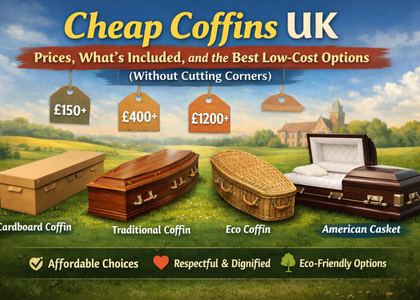
Coffins for Cremation (Rules + Best Materials + What Funeral Directors Accept)
 runppcseo
 Choosing a coffin for cremation often comes with a very specific worry: “I just want to make sure this is allowed.” When you’re already dealing with arrangements, emotions, and time pressure, the last thing you need is uncertainty about rules or suitability.
The reassuring truth is that cremation allows for a wide range of coffin options in the UK. There isn’t one approved type, one required material, or one “correct” choice. Most people are simply looking for something that is accepted, appropriate, and doesn’t add unnecessary cost or stress, and that’s exactly what this guide is designed to help with.
You don’t need prior knowledge. You don’t need to decode technical language. And you certainly don’t need to spend more than feels right. Whether you’re considering a simple cardboard coffin, a traditional wooden option, or a more eco-friendly natural coffin, the key is understanding what actually matters for cremation, and what doesn’t.
This guide will clearly explain which coffins are suitable for cremation, what crematoria typically look for, and how to choose confidently without second-guessing yourself. Along the way, we’ll reference practical options such as cardboard coffins, traditional coffins, natural and eco coffins, and what to consider afterwards, including cremation urns.
CompareTheCoffin exists to make this clearer, calmer, and less pressured. By the end of this guide, you should feel confident that you’re choosing something suitable, accepted, and right for your situation, without unnecessary worry.
Quick Answer: Coffins for Cremation (UK, What’s Allowed)
If you want the short, safe version, here it is:
Most coffins are suitable for cremation in the UK.
Crematoria are not concerned with style or price. They focus on safe handling, appropriate materials, and correct sizing.
In practical terms, this means:
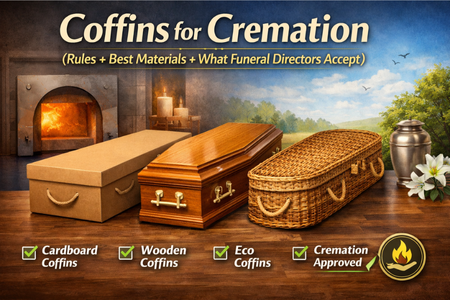
- Cardboard coffins are widely accepted and commonly used for cremation
- Traditional wooden coffins are suitable for cremation and burial
- Natural and eco coffins (willow, bamboo, banana, pandanus) are accepted for cremation
- American caskets can be cremated, but are heavier and sometimes less practical
What usually matters:
- The coffin is structurally sound
- It fits standard sizing requirements
- It can be safely handled by the staff
What usually doesn’t matter:
- How much does it costs
- Whether it was bought online or via a funeral director
- Whether it’s “simple” or “premium.”
Because of this flexibility, many families choose:
- Simple or cardboard coffins to keep things straightforward
→ View cardboard coffins - Natural coffins if sustainability is important
→ Browse natural and eco coffins - Traditional coffins, if a familiar appearance feels right
→ See traditional coffins
If you’re unsure, the only sensible check is with the funeral director or crematorium, not because options are restricted, but to confirm timing and delivery details.
What Makes a Coffin Suitable for Cremation?
Despite how complicated this can sound, cremation suitability is based on a small number of practical checks, not on appearance, tradition, or cost. Once you understand these, most of the uncertainty disappears.
Here’s what actually matters.
1. The Coffin Must Be Safe to Handle
Crematoria and funeral directors need to be able to move and position the coffin safely. This is why suitability focuses on structure, not decoration.
That means the coffin should:
- Be structurally sound
- Support weight evenly
- Have secure handles or handholds
This is why reinforced cardboard coffins are so widely accepted. They’re designed specifically with handling in mind.
2. Materials Must Be Appropriate
Cremation is compatible with a wide range of materials. In the UK, commonly accepted options include:
- Cardboard and fibreboard
- Wood and veneered wood
- Natural woven materials such as willow, bamboo, banana leaf, and pandanus
These materials are standard across many traditional coffins and natural and eco coffins, which is why they’re routinely used for cremation services.
What’s generally avoided:
- Excessive metal fixtures
- Unusual add-ons that aren’t part of standard coffin construction
This doesn’t mean “no metal at all”. Small fittings are common, just that simplicity is preferred.
3. Size and Fit Are More Important Than Style
Crematoria work with standard size ranges. As long as the coffin fits these parameters, the style rarely matters.
This applies equally to:
- Simple coffins
- Decorative coffins
- More formal options like American caskets (though these are heavier and sometimes require extra confirmation)
Most suppliers will guide you automatically on sizing, so this isn’t something you need to calculate yourself.
4. Finishes and Linings Are Secondary
Internal linings, exterior finishes, and printed designs do not affect cremation suitability. Families often worry that a coffin might be “too simple” or “not finished enough,” but crematoria do not assess coffins on appearance.
Printed designs, plain finishes, or natural textures are all acceptable, which is why options range from plain cardboard to fully lined wooden coffins.
A Simple Reassurance
If a coffin is sold in the UK as suitable for cremation, it almost always is. The key is choosing from established categories and confirming delivery details, not worrying about hidden rules.
Best Coffin Materials for Cremation (Side-by-Side Comparison)
At this stage, most people aren’t choosing whether a coffin is allowed. They’re choosing which material feels right. This section compares the most common cremation-suitable options clearly, without assumptions or pressure.
Quick takeaway
All of the materials below are widely accepted for cremation in the UK. The difference comes down to cost, appearance, weight, and personal values, not suitability.
Cremation Coffin Materials Compared
| Material | Suitable for cremation? | Why families choose it | Things to be aware of |
| Cardboard | Yes | Lowest cost, simple, widely accepted | Plainer appearance (by design) |
| Traditional wood | Yes | Familiar look, balanced cost | Veneer vs solid affects price |
| Natural / eco materials | Yes | Sustainability, softer aesthetic | Handwoven options cost more |
| American caskets | Usually yes | Formal presentation | Heavier, may need confirmation |
Cardboard Coffins
Cardboard coffins are one of the most common choices for cremation. They’re lightweight, reinforced, and designed specifically to meet cremation handling requirements.
Families often choose them because they:
- Keep costs under control
- Avoid unnecessary complexity
- Are fully accepted by crematoria
Modern designs range from plain to printed, and they’re often far more dignified than people expect.
→ Explore suitable options in the cardboard coffins collection.
Traditional Wooden Coffins
Traditional coffins offer a familiar appearance and sit comfortably in the middle of the price range. They’re suitable for cremation and burial, which is why they’re often chosen when families want something conventional without going premium.
Key points:
- Veneered and solid wood options are both cremation-safe
- Appearance varies from very simple to more detailed
- Cost increases with finish, not suitability
→ View examples under traditional coffins.
Natural and Eco Coffins
Natural coffins are increasingly popular for cremation, especially among environmentally conscious families or those planning.
Common materials include:
- Willow or wicker
- Bamboo
- Banana leaf or pandanus
They’re fully suitable for cremation and often chosen for their natural look and values rather than cost. Some simpler woven designs can also be cost-competitive.
→ Browse natural and eco coffins.
American Caskets
American-style caskets can be cremated, but they’re less commonly chosen for this purpose. Their weight, size, and fittings sometimes mean an extra confirmation step with the crematorium.
They’re usually selected when:
- A formal presentation is important
- The family prefers a hinged-lid design
→ See available options in American caskets.
The Practical Bottom Line
If you’re choosing cremation:
- Cardboard = simplest and most cost-effective
- Traditional wood = familiar and flexible
- Natural materials = values-led and accepted
- Caskets = possible, but less practical
Cardboard Coffins for Cremation: Pros, Cons, and Who They Suit
Cardboard coffins often raise the most questions, not because they’re unsuitable, but because they challenge old assumptions about what a coffin should look like. In reality, they are one of the most common and widely accepted choices for cremation in the UK.
Let’s address this clearly and calmly.
Quick answer
Yes, cardboard coffins are suitable for cremation. They are reinforced, dignified, and accepted by crematoria across the UK. Many families choose them for their simplicity, practicality, and lower cost.
Why Cardboard Coffins Are Commonly Chosen
Families often choose cardboard coffins for cremation because they:
- Are designed specifically for cremation handling
- Keep costs significantly lower than wooden options
- Are lightweight, making handling easier
- Avoid unnecessary materials or finishes
- Can be plain or printed, depending on preference
They are especially common when:
- The service is simple or private
- The family wants to avoid overspending
- The focus is on the ceremony, not the coffin itself
You can see the range of options available in the cardboard coffins category.
Addressing Common Concerns (Directly)
“Will it look cheap?”
Not in the way people often imagine. Modern cardboard coffins are structured, clean in appearance, and intentionally simple. Many are finished with neutral designs or meaningful prints.
“Is it disrespectful?”
No. Crematoria and funeral professionals see cardboard coffins daily. Respect comes from the service and the people present, not the material used.
“Will the crematorium accept it?”
Yes. Cardboard coffins are widely accepted for cremation and are often recommended for straightforward services.
When a Cardboard Coffin Makes the Most Sense
A cardboard coffin is often the right choice if:
- You want a simple, no-fuss cremation
- Budget matters, and you want clarity on costs
- The person preferred practicality over formality
- You’re planning a direct or unattended cremation
If you’re unsure whether cardboard feels right, it can help to compare it alongside traditional coffins or natural coffins to see what best fits your needs.
A Calm Reframe
Choosing a cardboard coffin is not about “settling for less.” For many families, it’s a deliberate, thoughtful choice that removes unnecessary cost and complexity.
Eco Options for Cremation (If Sustainability Matters)
For many families, cremation is chosen alongside a desire to keep things as environmentally conscious as possible. The good news is that cremation is compatible with a wide range of eco-friendly coffin options, and choosing sustainably doesn’t mean sacrificing suitability or dignity.
Quick answer
Yes, eco and natural coffins are suitable for cremation. Materials like willow, bamboo, banana leaf, and pandanus are widely accepted and commonly used in the UK.
What Makes a Coffin “Eco” for Cremation?
Eco-friendly coffins are typically made from:
- Renewable or fast-growing materials
- Minimal treatments or finishes
- Natural fibres or responsibly sourced wood
They’re designed to be practical first, not decorative, which aligns well with cremation requirements.
You’ll most often see these materials:
- Willow/wicker – handwoven, natural appearance
- Bamboo – strong, lightweight, and renewable
- Banana leaf or pandanus – woven fibres with a softer, organic look
All of these are commonly found within the natural and eco coffins range and are accepted for cremation.
Eco vs Cost: Finding the Right Balance
One common misconception is that eco options are always expensive. In reality:
- Simple, natural coffins can sit close to mid-range wooden coffins
- Handwoven or highly detailed designs tend to cost more
- Cardboard coffins are often the lowest-impact option overall, combining low material use with recyclability
For families who want an environmentally conscious choice and to control costs, it’s worth comparing:
- Cardboard coffins for simplicity and low footprint
- Natural coffins for a traditional eco aesthetic
When Eco Coffins Are a Good Fit
Eco-friendly coffins are often chosen when:
- Sustainability was important to the person
- The service is simple or values-led
- The family wants materials that feel natural and understated
They’re suitable for both cremation and burial, so you’re not limiting future decisions.
A Gentle Reassurance
Choosing an eco option isn’t about making a statement. It’s simply about aligning practical choices with personal values. Crematoria are familiar with these materials, and acceptance is routine.
Practical Checklist Before You Buy a Coffin for Cremation
This is the part that prevents last-minute stress. If you run through the checks below, you can be confident that the coffin you choose will be accepted, delivered on time, and handled smoothly.
Quick checklist
Before buying a coffin for cremation, confirm acceptance, sizing, delivery details, and timing. Everything else is usually optional.
1. Confirm Acceptance (Simple, One-Line Check)
In most cases, this is straightforward. A quick question to the funeral director is enough:
“We’re supplying the coffin ourselves. Is there anything specific we should be aware of?”
For standard options like:
…the answer is almost always no.
This check is about coordination, not permission.
2. Check Sizing (Usually Standard)
Most people fit standard coffin sizes, and reputable suppliers will guide you automatically.
Only flag this if:
- The person was unusually tall or broad
- The funeral director has mentioned a specific requirement
You are not expected to measure or calculate anything yourself.
3. Confirm Delivery Details
Make sure the following are clear:
- Delivery address (usually the funeral director)
- Required delivery date
- Contact name at the receiving location
Buying online typically means the coffin is delivered directly to the funeral director, clearly labelled and ready for use.
4. Ask About Timing (Especially for Cremation)
Many cremation-appropriate coffins are available within a few working days. Some are quicker.
If time is tight, it’s reasonable to ask:
- “Is this coffin available within our timeframe?”
- “When should it arrive to avoid delays?”
This applies equally to simple options and more traditional styles.
5. Don’t Overthink Finishes or Extras
For cremation:
- Linings and finishes do not affect suitability
- Printed or plain designs are equally accepted
- Simpler options are very common
Choose what feels right, not what sounds “expected”.
Final Reassurance
If a coffin is listed as suitable for cremation and supplied by a UK provider, it almost always is. This checklist exists to give you confidence, not to create more decisions.
After Cremation: Do You Need an Urn? (And How to Decide)
This is another area where people often feel unsure, mainly because no one explains that there’s no rush and no requirement to decide immediately.
Quick answer
No, you do not have to choose an urn straight away. After cremation, ashes can be kept temporarily, scattered later, or placed into an urn if and when it feels right.
Your Main Options After Cremation
1. Keeping ashes temporarily
Many families take time before making a decision. Ashes are usually returned in a simple container, which can be kept safely until you’re ready to decide on the next steps.
2. Choosing a cremation urn
Urns come in a wide range of styles and materials, from very simple to more decorative or eco-friendly. Some families choose an urn straight away; others wait weeks or months.
Common choices include:
- Simple urns for home or memorial placement
- Natural or biodegradable urns
- Urns designed for scattering or interment
You can explore options calmly in the cremation urns collection when you’re ready. There is no obligation to choose immediately.
3. Scattering ashes
Some families plan a scattering ceremony at a later date. This can be done privately, formally, or simply, depending on personal wishes.
How to Decide (Without Pressure)
Ask yourself:
- Was there a stated preference?
- Do we need to decide now, or can this wait?
- Would something simple feel more appropriate than something permanent?
There is no “correct” timeline. Taking time is completely normal.
Frequently Asked Questions
Are all coffins accepted for cremation in the UK?
Most are. Cardboard, traditional wooden, and natural coffins are all widely accepted.
Are cardboard coffins suitable for cremation?
Yes. They are commonly used, fully accepted, and designed for cremation handling.
→ See cardboard coffins
Are eco coffins suitable for cremation?
Yes. Materials like willow, bamboo, banana leaf, and pandanus are routinely used.
→ Browse natural and eco coffins
Can you cremate a casket?
Usually yes, though they are heavier and may require confirmation.
→ View American caskets
Do crematoria have different rules?
Most follow similar guidelines. A quick check with the funeral director is usually enough.
How quickly can a coffin be delivered?
Many cremation-appropriate coffins are available within a few working days.
Do I have to buy the coffin through the funeral director?
No. You are legally allowed to supply your own coffin.
A Final Reassurance
Choosing a coffin for cremation doesn’t need to be complicated, expensive, or rushed. Once you understand that most options are allowed, the decision becomes about what feels right, not about avoiding mistakes.
Whether you choose something simple, traditional, or eco-friendly, the important thing is that the choice is yours, made with clear information and without pressure.
If you need to revisit any section, take your time. Clarity is the goal, and you’ve already done the hardest part by seeking it.
Recommended Posts
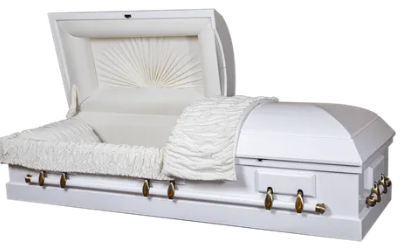
Caskets for Cremation
June 12, 2026