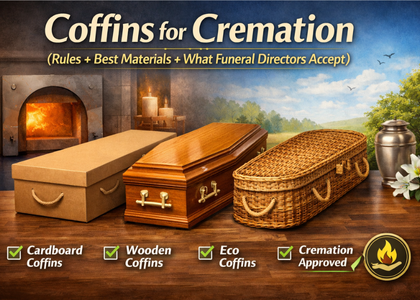
Cheap Coffins UK: Prices, What’s Included, and the Best Low-Cost Options (Without Cutting Corners)
 runppcseo
 Choosing a coffin or casket is not something most people ever expect to have to understand, and for many, it happens at a time when thinking clearly feels especially hard. There are unfamiliar terms, wide price differences, and a lot of quiet pressure to “just decide” quickly. If you’re feeling unsure, overwhelmed, or worried about making the wrong choice, that’s completely normal.
The important thing to know is this: you’re not supposed to already know how coffins work. There is no single “right” option, no universal standard, and no requirement to choose something expensive. What matters is finding something that fits your situation, whether that’s cremation or burial, a simple and affordable option, a traditional design, or something more environmentally conscious.
This guide is here to help you understand your options clearly and calmly. We’ll walk through the different types of coffins and caskets available in the UK, explain the real differences between them, and outline what actually affects cost, so you can avoid paying for things you don’t need. Along the way, we’ll point to practical options such as cardboard coffins, traditional coffins, natural and eco coffins, and American caskets, where helpful.
CompareTheCoffin exists to make this process more transparent and less pressured. By the end of this guide, you should feel more informed, more confident, and better equipped to make a decision that feels right for you, without being rushed or oversold.
Quick Answer: What Most People Need to Know About Coffins (UK)
If you want a clear starting point, here it is:
A coffin is the container used to hold a person for burial or cremation. In the UK, most coffins are rectangular with a tapered shape, made from materials like wood, cardboard, or natural fibres. A casket is a more American-style design, usually rectangular with a hinged lid, and is typically heavier and more decorative.
There is no requirement to choose a particular type. Funeral directors cannot force you to buy a coffin through them, and a higher cost does not mean higher quality or greater respect. The right choice depends on three things only:
- The type of service (cremation or burial)
- Your personal or family preferences (simple, traditional, eco, or premium)
- Your budget
For example:
- For cremation, many families choose simple or cardboard coffins because they are widely accepted and keep costs down.
- For burial, some families prefer traditional wooden coffins or natural coffins made from willow or bamboo.
- For those who want a more formal or familiar appearance, American caskets are also available in the UK.
This guide will walk you through each option step by step, explain the real differences, and help you compare choices calmly. If you already know what matters most to you, you can explore specific options such as coffins for cremation, traditional coffins, natural and eco coffins, or American caskets.
If you’re unsure, that’s exactly where most people start, and that’s what the rest of this guide is designed to help with.
Coffin vs Casket: What’s the Difference (And Does It Actually Matter?)
This is one of the most common points of confusion, and it’s simpler than it sounds.
In the UK, the word coffin is used for most funeral services. A casket is a specific style of coffin, more commonly associated with American funerals. Both serve the same purpose. The difference is mainly shape, opening style, and appearance, not dignity or respect.
Here’s the clear breakdown:
- Coffins (UK standard)
- Tapered shape (wider at the shoulders, narrower at the feet)
- Fully removable lid
- Typically lighter and simpler
- Available in a wide range of materials, including cardboard, wood, and natural fibres
- Commonly used for both cremation and burial
- Caskets (American style)
- Rectangular shape
- Hinged lid (often half-opening or full-opening)
- Usually heavier and more decorative
- Often associated with a more formal or traditional presentation
Importantly, neither option is “better.” Funeral directors, crematoria, and burial grounds in the UK accept both, provided the coffin or casket meets basic size and safety requirements.
Most families choose based on:
- What feels appropriate for the person
- Whether the service is a cremation or a burial
- Practical considerations like weight, handling, and cost
If you’re looking for a familiar UK-style option, exploring traditional coffins is often the easiest place to start. If you prefer a more structured, formal design, American caskets offer that style within the UK market.
The key takeaway: you’re choosing a format, not a measure of care or respect. The right choice is simply the one that aligns with your needs, preferences, and circumstances, nothing more.
The Main Types of Coffins (Explained Simply)
Once you move past the coffin vs casket question, the next decision is type. This usually comes down to material, which affects appearance, suitability, cost, and environmental impact. There’s no hierarchy here, just different options for different needs.
Here’s a clear, practical overview of the main coffin types you’ll see in the UK.
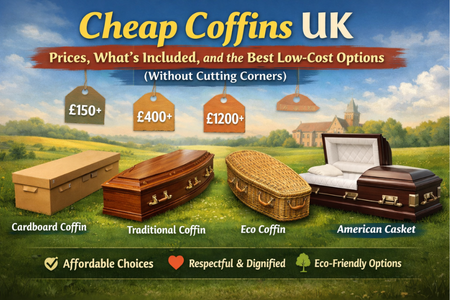
Cardboard coffins
These are one of the simplest and most affordable options. They’re lightweight, widely accepted for cremation, and increasingly chosen by families who want to keep things straightforward without unnecessary cost. Modern cardboard coffins are reinforced, dignified in appearance, and available in plain or printed designs. If cost or simplicity is a priority, it’s worth starting with cardboard coffins.
Traditional wooden coffins
This is what many people picture when they think of a funeral. Typically made from veneered or solid wood, traditional coffins offer a familiar look and are suitable for both burial and cremation. They sit in the middle ground, not the cheapest, not the most elaborate, and are often chosen when families want something conventional and understated. You can view typical options under traditional coffins.
Natural and eco coffins
Made from materials like willow, bamboo, banana leaf, or other woven fibres, these are popular with environmentally conscious families and for green burials. They’re also suitable for cremation. Natural coffins tend to look softer and more organic, and many people choose them to reflect personal values rather than appearance alone. Explore examples in the natural and eco coffins range.
American caskets
Caskets are more structured and formal in design, usually rectangular with a hinged lid. They’re heavier and often more detailed, which some families prefer for a more traditional presentation. While less common in the UK, they are fully available and accepted. If this style feels more appropriate, see the American caskets collection.
At this stage, you don’t need to choose, only to recognise which options feel broadly right.
Coffins for Cremation vs Burial: What Actually Matters (and What Doesn’t)
One of the biggest worries people have is choosing something that isn’t suitable for the service. The reality is far simpler and far less restrictive than it’s often made to feel.
Cremation and burial do not require completely different coffins. Most coffins sold in the UK are suitable for both. The differences are about practical fit, not rules or status.
For cremation
Cremation places fewer demands on the coffin itself. The focus is on safe handling and appropriate materials, not appearance or cost. This is why many families choose simpler options.
Common choices include:
- Cardboard coffins, which are lightweight, widely accepted, and one of the most cost-effective options
- Traditional wooden coffins, if a more familiar look is preferred
- Natural and eco coffins, which are suitable and increasingly popular
If you’re planning a cremation and want clarity without overcomplicating things, browsing cardboard coffins or natural coffins is often a sensible starting point.
For burial
Burial places slightly more emphasis on structure and durability, simply because the coffin is lowered into the ground. That doesn’t mean it needs to be expensive or ornate.
Common burial choices include:
- Traditional wooden coffins for a classic appearance
- Natural coffins for green or woodland burials
- American caskets are a more formal, robust design is desired
You can explore these options through traditional coffins or American caskets, depending on what feels appropriate.
What doesn’t matter as much as people think:
- Price does not equal respect
- Heavier does not mean better
- Funeral directors cannot insist on a specific coffin type
The key takeaway is this: choose based on the service, your values, and your budget, not pressure or assumptions.
Coffin Prices Explained: What You’re Really Paying For (UK Guide)
Price is often the most stressful part of this decision, not because families want “the cheapest,” but because it’s hard to tell what actually justifies the cost. This section breaks that down clearly.
Quick answer
In the UK, coffin prices usually vary based on material, construction, finish, and handling, not dignity or suitability. A higher price does not mean a coffin is more respectful or more “required”.
Typical Coffin Price Ranges (UK)
| Coffin type | Typical use | What affects the price | Usual price range |
| Cardboard coffins | Cremation | Print/design, reinforcement | £150 – £400 |
| Traditional wooden coffins | Cremation or burial | Veneer vs solid wood, mouldings | £400 – £1,200 |
| Natural / eco coffins | Cremation or burial | Material (willow, bamboo, banana), weave complexity | £600 – £1,500 |
| American caskets | Burial (sometimes cremation) | Size, lid style, material, interior | £1,200 – £4,000+ |
(Prices shown are indicative and reflect the coffin itself, not the full funeral cost.)
What Actually Drives the Cost
These are the real factors that increase price:
- Material – solid wood, woven fibres, or specialist finishes cost more than cardboard
- Construction detail – moulded panels, raised lids, or domed tops
- Size and weight – larger or heavier coffins cost more to manufacture and transport
- Design and finish – printed artwork, staining, or decorative interiors
What doesn’t meaningfully change suitability:
- Whether it’s “basic” or “premium”
- Whether it’s bought online or via a funeral director
- Whether it looks simple or ornate
Cost-Conscious Options That Are Widely Chosen
If keeping costs under control matters, these are commonly selected and fully accepted options:
- Cardboard coffins – practical, dignified, and often chosen for cremation
→ Explore cardboard coffin options - Simple traditional coffins – familiar appearance without added features
→ View traditional coffins - Natural coffins with simpler weaves – eco-friendly without premium finishes
→ Browse natural and eco coffins
For families who specifically want a more formal presentation, American-style caskets are also available, but it’s helpful to know these sit at the higher end of the price range:
→ See American caskets
A Reassuring Reality Check
- You are not expected to spend more to show care or respect
- Funeral directors cannot require you to buy a coffin through them
- Many families quietly choose simpler options, especially for cremation
If you ever feel unsure, it’s reasonable to pause and ask what you’re paying for, not just how much it costs.
Buying a Coffin Online: How It Works (and What to Check)
Buying a coffin online can feel like a big step, especially if you’ve never done it before. In practice, it’s usually simpler and more controlled than buying through a funeral director, as long as a few basics are confirmed upfront.
Here’s how the process typically works in the UK.
Step 1: Choose the coffin type that fits your needs
By this point, most people have narrowed things down to one of the following:
- Simple or cardboard coffins for cremation and cost control
→ View cardboard coffins - Traditional wooden coffins for a familiar, understated option
→ Browse traditional coffins - Natural or eco coffins for green or environmentally conscious services
→ See natural and eco coffins - American caskets for a more formal, structured presentation
→ Explore American caskets
You don’t need to overthink the choice. Suitability is far broader than many people expect.
Step 2: Confirm acceptance with the funeral director
This is usually straightforward. A simple question like:
“We’re supplying the coffin ourselves. Is there anything specific we should be aware of?”
is enough.
In most cases, the answer is no. UK funeral directors are used to families sourcing coffins independently.
Step 3: Check sizing and timing
Reputable suppliers will guide you on:
- Standard sizing (which suits most people)
- Lead times and delivery windows
- Direct delivery to the funeral director or crematorium
This removes the need for you to transport anything yourself.
Step 4: Delivery and handover
The coffin is delivered directly to the funeral director, clearly labelled and ready for use. From that point on, it’s handled the same as any coffin sourced through a funeral home.
Common Concerns (Answered Directly)
- “Is this unusual?” No. Many families now buy coffins online.
- “Will the funeral director object?” They shouldn’t, and legally, they can’t require you to buy through them.
- “Is it risky?” Not when you use an established UK supplier and confirm delivery timelines.
Buying online often gives families more clarity, more choice, and better cost control, without adding stress.
Frequently Asked Questions (Clear, Straight Answers)
This section brings together the questions people most often ask when they’re close to making a decision. Each answer is deliberately simple and factual, so you can move forward without second-guessing yourself.
Can I really buy a coffin myself instead of through a funeral director?
Yes. In the UK, you are legally entitled to supply the coffin yourself. Funeral directors cannot require you to purchase one through them.
Will a funeral director accept a coffin bought online?
In almost all cases, yes. As long as the coffin meets basic size and handling requirements, it’s treated the same as one supplied by a funeral home.
Is a cheaper coffin less respectful?
No. Respect comes from the service and the people there, not the price or material of the coffin. Many families choose simple options, especially for cremation.
Are cardboard coffins actually suitable?
Yes. Modern cardboard coffins are reinforced, dignified, and widely accepted for cremation. You can view examples in the cardboard coffins range.
Do I need a different coffin for cremation and burial?
Usually not. Most coffins are suitable for both. Burial may place slightly more emphasis on structure, which is why some families choose traditional coffins or natural coffins.
Are eco or natural coffins accepted everywhere?
Yes, particularly for green burials and cremation. Acceptance is widespread, and natural materials are now very common.
What’s the difference between a coffin and a casket again?
A coffin is the standard UK shape (tapered). A casket is rectangular with a hinged lid, more commonly associated with American-style services. Both are acceptable. It’s a preference, not a requirement.
→ See American caskets
How quickly can a coffin be delivered?
Many coffins can be delivered within a few working days, sometimes sooner. Delivery is usually made directly to the funeral director.
A Final Reassurance
If there’s one thing to take away from this guide, it’s this: you’re allowed to slow the process down and ask clear questions. There is no obligation to spend more than you’re comfortable with, and no single “correct” choice.
Whether you’re looking for something simple, traditional, environmentally conscious, or more formal, the right option is the one that fits your needs, not anyone else’s expectations.
CompareTheCoffin exists to give you clarity and choice, without pressure. Take your time, revisit the sections that matter most to you, and move forward knowing you’re making an informed decision, calmly, confidently, and on your own terms.
Recommended Posts
Caskets for Cremation
June 12, 2026